The future of the healthcare revenue cycle is taking shape today.
From labor shortages to rising denial volumes and evolving regulations to growing patient expectations, AI is bringing new opportunities to turn RCM obstacles into opportunities.
Harnessing the power of Waystar’s mission-critical infrastructure, unmatched proprietary data, an extensively deployed network, and deep domain expertise, healthcare organizations are working smarter, cutting complexity, and accelerating reimbursement. 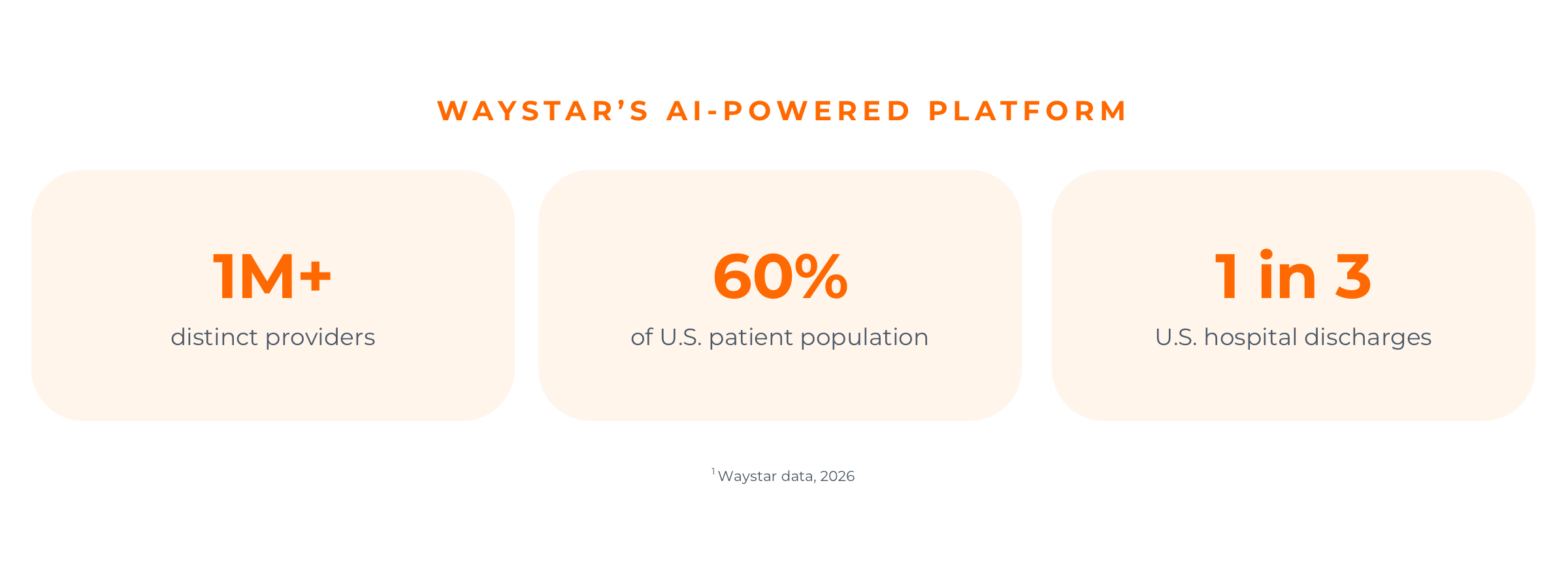 During the Fall 2026 Waystar Innovation Showcase, Waystar highlighted new innovations advancing the path toward an autonomous revenue cycle, powered by AltitudeAI™ and a connected platform that turns intelligence into action.
AI INNOVATIONS IN HEALTHCARE RCM
1. Agentic AI that turns intelligence into action
As AI becomes more deeply embedded across the revenue cycle, healthcare organizations are leveraging new technologies to reduce manual work, improve efficiency, and keep pace in a complex revenue cycle landscape.
At the Waystar Innovation Showcase, we showed how the agentic AI is helping bring the autonomous revenue cycle to life.
For example, Conversational Analytics is changing how teams engage with data by asking questions in natural language and interacting directly with claims, denials, and remit information to uncover actionable insights faster.
In addition to analytics, AI is streamlining critical claim workflows. New capabilities like Auto Claim Resubmission help automatically identify, track, and resubmit eligible claims, recovering revenue faster while reducing manual claim follow-up work.
COB Routing simplifies coordination of benefits workflows by identifying payer sequencing and routing mismatches before submission, helping prevent delays and avoidable denials.
For the mid-revenue cycle, agentic AI support for CDI cases analyzes clinical documentation and suggests the appropriate working DRGs, helping CDI nurses focus their review while maintaining accuracy. New findings from Waystar’s 2026 State of the mid-revenue cycle report underscore the growing role of AI in helping teams work more efficiently across the mid-cycle.
As AI continues to evolve, capabilities like these are helping empower teams to make faster, more informed decisions and focus on driving outcomes.
Want to dive deeper? Discover how leading organizations are using analytics to improve decision-making and drive stronger financial performance.
AI INNOVATIONS IN HEALTHCARE RCM
2. Intelligent appeals that accelerate recovery
Denied claims continue to create significant operational and financial challenges for providers. Before an appeal can begin, teams often must investigate denial causes, gather supporting documentation, and navigate payer portals.
To help address these challenges, Waystar showcased innovations that bring greater intelligence to the revenue recovery process.
Using Waystar AltitudeAI™, agentic AI root cause automatically identifies denial root causes and recommends the next best action, helping accelerate resolution and recover more revenue.
In addition, Electronic Appeal Submission helps teams move more quickly by securely delivering appeal documentation directly to payer portals through automated, trackable submissions.
By simplifying traditionally complex recovery workflows, these innovations help staff take action faster, reduce manual effort, and improve efficiency. Healthcare organizations that streamline recovery workflows are seeing meaningful results like 3X faster appeal package.¹
This reflects a broader shift across the revenue cycle: moving beyond reactive intervention toward a more proactive and intelligent approach.
Want to learn more? Explore four ways AI and automation are helping organizations reduce denials and protect revenue.
AI INNOVATIONS IN HEALTHCARE RCM
3. Regulatory intelligence that helps providers stay ahead of change
Regulatory complexity continues to grow as healthcare organizations navigate changing coverage requirements, evolving payer policies, and increasing administrative demands.
At the same time, healthcare providers are looking for ways to maintain financial performance and patient access without adding operational burden.
With roughly 15M people likely to be uninsured by 2034,² healthcare organizations increasingly need greater visibility into potential coverage issues and more proactive ways to address them.
At the Waystar Innovation Showcase, we highlighted innovations designed to help providers anticipate challenges earlier, reduce manual effort, and respond with greater confidence.
One example is Medicaid Coverage Monitoring, which helps organizations proactively identify coverage changes and redetermination events, enabling earlier intervention and helping reduce reimbursement risk.
By bringing intelligence, automation, and workflow efficiency together, healthcare organizations can adapt more quickly, minimize disruption, and better support both financial performance and patient access.
Looking for ways to stay ahead? Get insights on how to prepare for regulatory changes like the One Big Beautiful Bill Act (OBBBA).
AI INNOVATIONS IN HEALTHCARE RCM
4. Personalized patient financial experiences that build trust
Patient expectations continue to evolve with the assumption that healthcare financial interactions will be as simple, transparent, and convenient as the digital experiences they encounter in other parts of their lives.
At the same time, more than 60% of providers report patient skepticism around text scams,¹ creating new challenges for digital payment collection.
As providers work to improve engagement and financial performance, they’re looking for ways to create more trusted, convenient payment experiences.
One example is RCS messaging, which transforms traditional text-based billing communications into rich, interactive experiences with verified sender profiles that authenticate provider brands and build confidence in safe, frictionless payments.
By enabling patients to engage directly within a secure messaging environment, providers can create more intuitive experiences that make it easier for patients to understand balances and explore payment options.
Ultimately, that means strengthening patient satisfaction while supporting stronger financial outcomes like a 20-30% average collections lift.¹
See how simplifying patient payments can transform your financial performance. Get our playbook to improve collections and reduce friction while creating a better patient financial experience.
Advancing the autonomous healthcare revenue cycle
The innovations unveiled at the Fall 2026 Waystar Innovation Showcase illustrate how connected data, agentic AI, and automation can work together to advance the autonomous revenue cycle.
From identifying the next best action to accelerating appeals to navigating regulatory change and personalizing patient engagement, Waystar continues to minimize manual intervention, eliminate payment friction, and help providers realize stronger financial outcomes.
Curious to learn more? Watch our recent webinar for a deeper dive into these new capabilities across the Waystar platform.

Sources:
¹Waystar data, 2026
²CBO projection, 2026