
Prior authorization has long been a burden for organizations, creating delays, denials, and inefficiencies across the revenue cycle. CMS-0057-F aims to modernize those processes by introducing:
- FHIR-based APIs
- Faster decision timelines
- Greater transparency
But as payers implement these requirements, what steps do organizations need to take now to move toward automated workflows and away from manual processes?
Advocate Health uses Authorization Manager to surface payer policy issues early and reduce costly denials.
What CMS-0057-F means for organizations
CMS-0057-F requires healthcare organizations to modernize prior authorization through interoperable, FHIR-based workflows.
The CMS-0057-F rule applies to:
- Medicare Advantage
- Medicaid
- CHIP
- Qualified Health Plans (QHPs)
Key requirements will roll out through 2026 with full compliance expected in 2027.
What’s the purpose of CMS-0057-F?
The goal of CMS-0057-F is to create a more transparent, speedy, and standardized prior authorization process. To achieve this, organizations need clean, complete authorization submissions and real-time visibility into authorization status.
As the industry transitions, providers can expect more:
- Pressure from payers to adopt electronic prior authorization
- Standardized data exchange through FHIR-based APIs
- Accelerated response timelines and decision-making
- Opportunities to reduce care delays and accelerate financial outcomes through electronic prior authorization

What should providers do now to prepare for CMS-0057-F?
1. Assess your current prior authorization workflows
Evaluate how much of your authorization process still depends on:
- Manual submission paths
- Payer portal checks
- Phone calls
- Fax-based interactions
Understanding your current state will help you identify where modernization should begin.
2. Evaluate readiness for FHIR-based workflows
Whether your organization uses an EHR, PM, HIS, or other third-party platform, you must understand:
- How future FHIR connectivity will fit into your authorization process
- Where workflow changes may be necessary
Since CMS-0057-F requires organizations to support electronic, standardized exchanges, it’s no longer a matter of if workflow changes are necessary but how you will accomplish them.
3. Build a transition plan and roadmap now
Don’t wait for payer implementations to put your organization on a compressed and stressful timeline.
Develop a roadmap now that outlines:
- Workflow changes
- Technology dependencies
- Staffing requirements
- Implementation milestones
4. Choose partners to support today’s workflows and tomorrow’s requirements
The transition to FHIR won’t happen overnight, and the related changes will resound for years.
Look for a partner that can:
- Support existing connectivity methods
- Prepare for future standards and payer adoption
Activating AI + advanced automation to manage CMS-0057-F
CMS-0057-F is accelerating the industry’s shift to connected, electronic prior authorization. Organizations that act now and select a proven RCM partner will be able to quickly adapt to payer requirements — while improving efficiency and strengthening compliance.
Chart the way forward with Waystar Authorization + Auth Accelerate
Waystar’s Authorization Suite is designed to support FHIR connectivity and evolving CMS-0057-F requirements. It supports CRD, PAS, and DTR integrations while routing requests based on payer, plan, and service requirements.
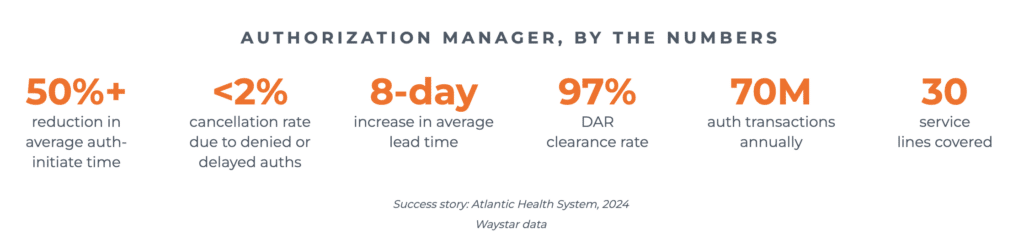
Waystar Auth Accelerate delivers fast, accurate authorizations — with or without clinical documentation. Get real-time approvals, automatic updates, and full transparency to eliminate delays and fully automate end-to-end prior authorization workflows. See how 6.8+ million accurate, actionable rules and proactive status updates get our clients authorizations 2 days faster.